








Lime and Clay Washes
9 February 2026
Do you appreciate the texture and character of lime and clay plasters, but need a thinner finish or have concerns about long-term durability? Then lime and clay washes could be the perfect alternative.
Historically, a wash was a simple mixture of lime and water, also known as limewash, used to sanitise and whiten building façades (the whitewashed Greek houses featured on countless travel brochures immediately come to mind). It therefore served as a sacrificial layer, intended to be renewed regularly (typically every 5 to 10 years, depending on exposure) in order to protect the plaster beneath. Depending on its dilution, limewash takes different forms and serves different purposes. More concentrated mixtures, known as limewash coatings and washes, are primarily protective, whereas more diluted finishes, such as limewater washes and patinas, are mainly decorative.
Today, washes are no longer limited to exterior façades and have found their place indoors, where they can be adapted to suit a wide range of aesthetic preferences. A traditional wash consists simply of lime or white clay mixed with water, but it can also be enriched with a filler, such as marble powder, to create additional texture and opacity. This richer mixture is known in France as a colature. Washes can also be pigmented (with limewater washes and patinas generally producing deeper colours) and modified with additives to improve workability or durability over time, such as casein or natural resins.
Washes are traditionally applied using a limewash brush or a wide brush. As a result, they do not produce a perfectly smooth finish: brush marks remain visible, with the degree of texture depending on the dilution of the mixture (often creating the characteristic overlapping infinity-shaped pattern). At least two coats are required, although additional coats may be applied depending on the desired finish.
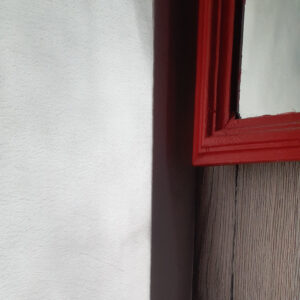
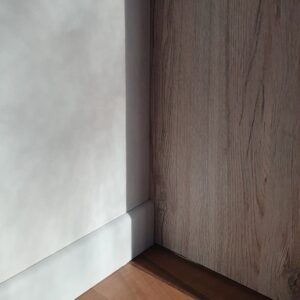
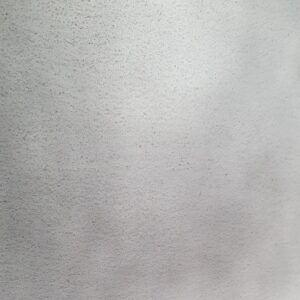
While washes have traditionally been applied to exterior plasters to protect them, they can also refresh stained or damaged interior finishes or simply help create a new atmosphere. They can be applied directly to plasterboard or existing breathable paint finishes. In this example, a white clay and marble powder wash has been applied over a damaged clay paint finish on plasterboard, creating subtle variations in light and texture.
📖 École d’Avignon (2016) – Techniques et pratiques de la chaux, Éditions Eyrolles, 226 p.