From self‑building a timber house to supporting guided self‑renovation
Discovering self‑building
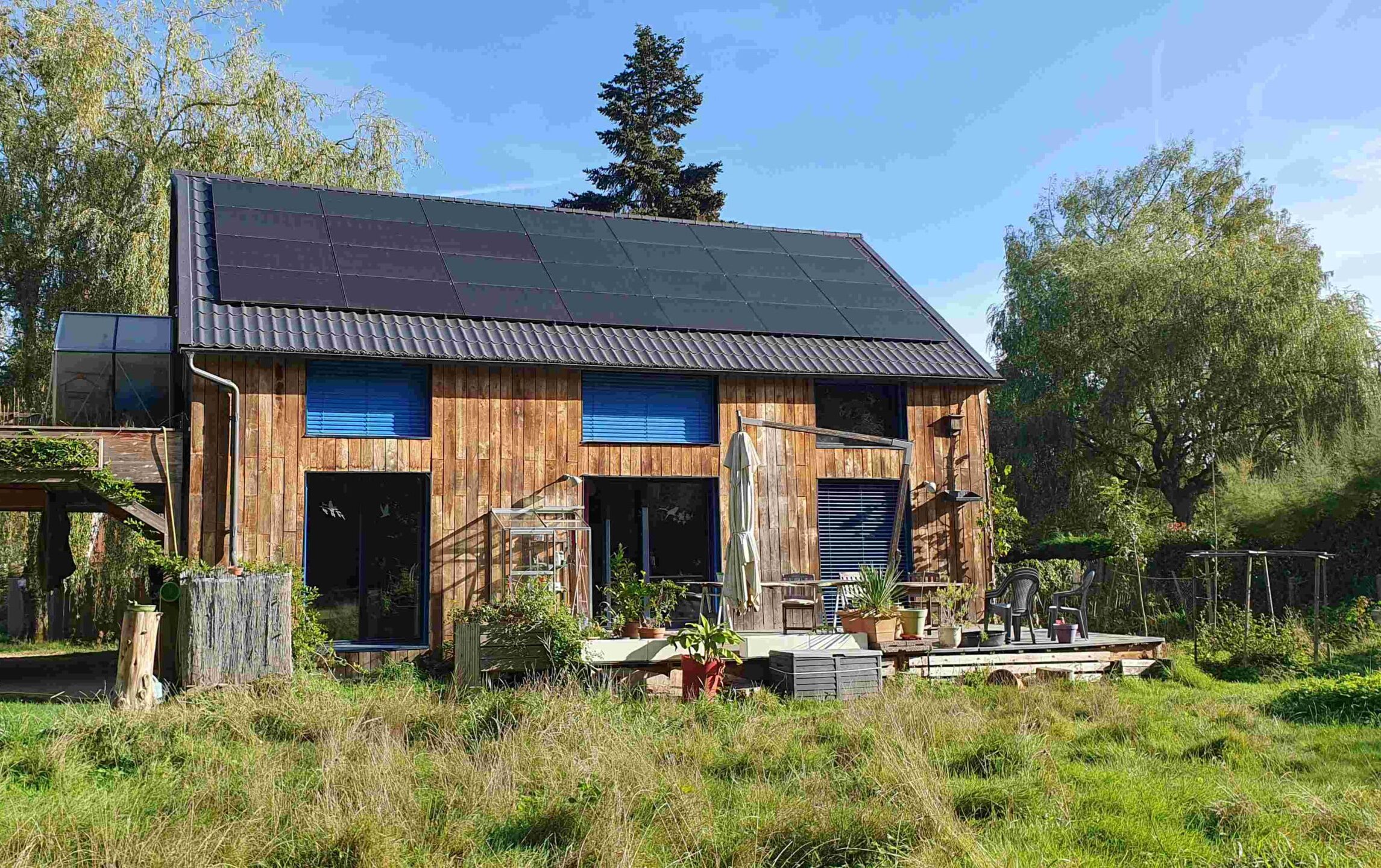
My name is Florence Allièse. The idea of self‑building a house with very low heating needs — and therefore a limited environmental impact — came to us in 2016, with my partner. We began researching construction systems, insulation, heating, ventilation… Almost two years later, we started the guided self‑build of a timber house in the Chevreuse Valley.
It was a demanding experience, carried out alongside my work as an animal care technician in an SPA shelter. But it was also the discovery of a new world and a new community: eco‑self‑building!
Une formation en écoconstruction
En 2022, j’ai décidé de quitter la protection animale pour me consacrer à la rénovation écologique de l’habitat. Après plusieurs expériences de chantier (construction bois, enduits chaux-sable et chaux-chanvre, isolation terre-paille), j’ai débuté un Master en écoconstruction. Cette formation m’a permis de compléter mes connaissances en thermique, acoustique, écomatériaux, droit de l’urbanisme et économie de la construction. Elle m’a également permis de découvrir les coulisses d’un espace France Rénov’ (le service public de la rénovation) lors de mon alternance à l’association Énergies Solidaires au nord des Yvelines. Mon mémoire, qui portait sur les motivations et les freins à l’utilisation des écomatériaux chez les particuliers et les professionnels, a mis en évidence le manque de connaissances sur ces matériaux malgré une apparente démocratisation.
Training in eco‑construction
In 2022, I decided to leave animal welfare work to dedicate myself to ecological home renovation. After several hands‑on site experiences — timber construction, lime‑sand and lime‑hemp plasters, and earth‑straw insulation — I began a Master’s degree in eco‑construction.
This training allowed me to deepen my knowledge in thermal performance, acoustics, eco‑materials, urban planning law, and construction economics. It also gave me the opportunity to discover the inner workings of a France Rénov’ centre (the national public renovation service) during my work‑study placement at the association Énergies Solidaires, in northern Yvelines.
My thesis, which focused on the motivations and barriers to using eco‑materials among both homeowners and professionals, highlighted a significant lack of knowledge about these materials despite their apparent rise in visibility.
Back on site again !
Although this Master’s degree gave me a solid theoretical foundation, it lacked one essential element: hands‑on practice. Discovering earth plasters during a supervised project led by Aurélie Massé from Matières Vivantes was a turning point. I went on to train in raw earth plasters with Noria Formation, and in lime plasters at the European School of Material Arts.
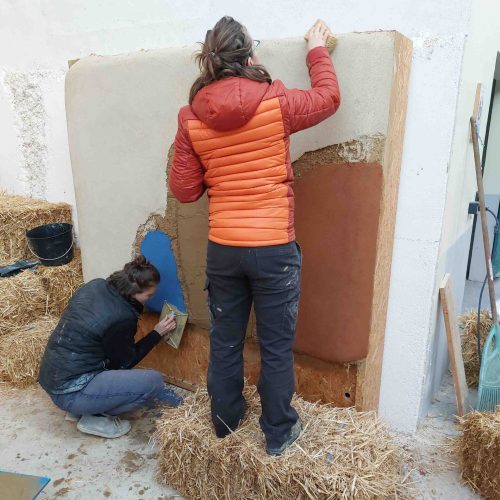
Application of earth plasters on a straw‑bale model for the materials library of the Vexin Français Regional Nature Park, carried out as part of a supervised project led by Aurélie Massé (photo credit: PNRVF)
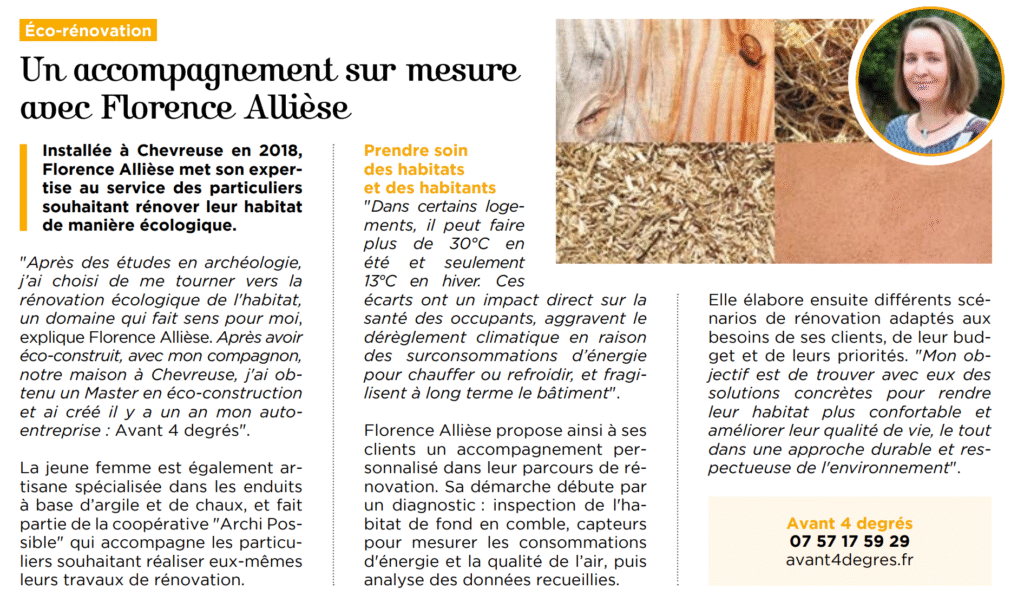
They’re talking about me in the Chevreuse newspaper!
Building or renovating your home yourself — it’s archi possible!
**Self‑building or guided self‑renovation involves carrying out all or part of one’s renovation work independently. It is far from anecdotal: according to the TRÉMI survey co‑led by ADEME and published in 2022, 29% of the actions recorded were carried out through self‑renovation, including 3% through guided self‑renovation.
Launched in 2015 by ANAH, the Guided Self‑Rehabilitation (ARA) scheme enables homeowners to carry out their own renovation work — whether energy‑related or not — with the methodological and technical support of a professional. Initially aimed at households facing energy poverty, ARA has since evolved and now takes different forms across its 600 operators.
Self‑building or self‑renovation offers a response to two major obstacles commonly faced by homeowners: cost and the shortage of skilled tradespeople and companies. Thanks to Jean‑Michel Pinon and his company Homelib, we were able to invest the labour savings into high‑quality materials, while still benefiting from professional expertise and ten‑year liability insurance.
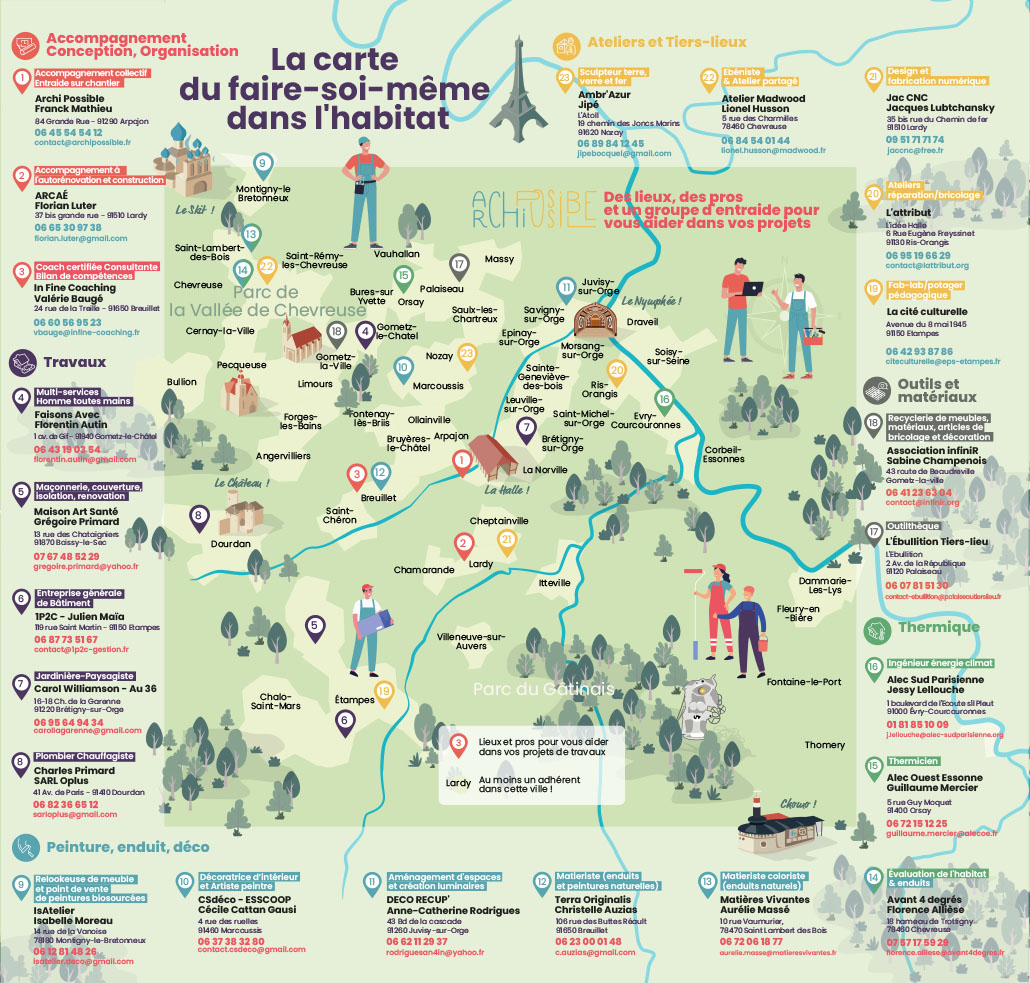
Map of professionals in the Archi Possible network